

Healthy Summer Guide
Insect Repellent
For the best protection, your insect repellent should contain DEET. The American Academy of Pediatrics recommends that repellents should contain no more than 30% DEET when used on children. Insect repellent is not recommended for children younger than 2 months. The higher the percentage of DEET, the longer the product lasts.
Apply repellent mainly to clothing and shoes. Repellents should not be sprayed directly onto your child's face. Instead, spray a little on your hands first and then rub it on your child's face. Don’t put any repellent on the hands or anyplace your child will put in his or her mouth. When returning indoors, wash treated skin and clothing with soap and water.
Insect Bites
Most insect bites result in a small, red bump. Some are larger (like a hive) and some have a small water blister in the center. The size of the swelling can vary from a dot to ½ inch. These are normal reactions to an insect bite. This does not mean your child has an allergy or the bite is infected. The best way to prevent insect bites is to use insect repellent!
Itchy Insect Bites
- Apply calamine lotion or a baking soda paste.
- If the itch is severe, use 1% hydrocortisone cream 4 times a day.
- Also apply firm, sharp, direct, steady pressure to the bite for 10 seconds. A fingernail, pen cap, or other object can be used.
- Antihistamine: If the bite is very itchy after topical treatment, try an oral antihistamine like Benadryl.
Painful Insect Bites
Rub the bite for 15 to 20 minutes with a cotton ball soaked in a baking soda solution once. This will usually reduce the pain. You can also apply an ice cube in a wet washcloth for 20 minutes. Give Tylenol or Ibuprofen for pain relief.
Antibiotic Ointment
If the insect bite looks infected, apply an antibiotic ointment 3 times a day and cover with a Band-Aid to prevent scratching and spreading.
Call your doctor if:
- Bite looks infected - draining pus.
- New redness or red streak around the bite begins over 48 hours (2 days) after the bite.
- Redness or red streak around the bite becomes larger than 1 inch.
Sunburn
Sunburn is due to the overexposure of the skin to the ultraviolet rays of the sun or a sunlamp. Symptoms of sunburn do not begin to appear until 2 to 4 hours after the damage has been done. The peak reaction of redness, pain, and swelling is not seen for 24 hours. Pain usually stops after 2 or 3 days. Peeling usually occurs day 5 through 7.
Ibuprofen
Start Ibuprofen for pain relief ASAP to help reduce the swelling and discomfort.
Cool Baths
Apply cool compresses to the burned area several times a day to reduce pain and burning. For larger sunburns, give cool baths for 10 minutes. Add 2 oz. baking soda per tub. Avoid soap on the sunburn.
Extra Fluids
Offer extra water on the first day to replace the fluids lost to the sunburn and to prevent dehydration and dizziness.
Blisters
Leave closed blisters alone to prevent infection. For broken blisters, trim off the dead skin with fine scissors cleaned with rubbing alcohol.
Antibiotic Ointment
For any large open blisters, apply an over-the-counter antibiotic ointment. Remove it with warm water and reapply it twice a day for 3 days.
Call your doctor if:
- Extremely painful sunburn, increasing tenderness after day 2
- Looks infected (draining pus, red streaks)
Sunscreen
- Keep babies younger than 6 months out of direct sunlight. If they are going to have sun exposure, use sunscreen and immediately wash off when inside.
- Avoid mid-day sun.
- Lotion is often able to be applied more evenly than sprays. Apply sunscreen 30 minutes before going outdoors. It needs time to absorb into the skin.
- Use SPF 30 or higher with UVA and UVB protection.
- Dermatologists recommend an ingredient that will give better protection called Avobenzone.
- Reapply sunscreen every 3 to 4 hours as well as immediately after swimming or profuse sweating. Waterproof sunscreen only stays on for 30 minutes in the water.
- For sensitive areas of the body, such as the nose, cheeks, tops of the ears, and the shoulders, choose a sunscreen with zinc oxide or titanium dioxide. Apply lip balm with PABA.
- Use sunglasses with UVA and UVB protection and use protective clothing that is light weight but tightly woven.
Repeated sun exposure causes premature aging of the skin and increases the risk of skin cancer in the damaged area.
The best way to prevent skin cancer is to prevent sunburn.
Poison Ivy
Poison ivy is a plant found in all parts of the United States except the Southwest. It is generally identified by having 3 leaves in clusters. This plant secretes oil that causes the rash in people. Of note, poison oak is generally not found in this part of the country.
What does the rash from poison ivy look like?
A rash from poison ivy generally looks red, swollen, and has fluid-filled blisters that are found in lines. The first time children are exposed to poison ivy, it takes 7 to 10 days for the child’s body to recognize the oil. On repeat exposures, this rash may appear within 12 to 24 hours. The rash can last up to 3 to 4 weeks.
What can I do at home if a rash develops?
- Apply calamine lotion 3 to 4 times daily to cut down on itching.
- Apply 1% hydrocortisone twice daily to the affected area.
What can I do at home for exposure to poison ivy?
- Avoidance is the best treatment. Become familiar with what the plant looks like.
- If poison ivy develops, wash all clothes and shoes in soap and water to wash the oil off.
- Wash the area of skin that was exposed for at least 10 minutes with soap and water.
Call your doctor if:
- Severe poison ivy on the face
- Difficulty breathing
- Fever
- Using home methods listed above with no relief after 1 to 2 weeks
- Looks infected (draining pus, red streaks)
Tick Bites
Most tick bites are harmless and the spread of disease by ticks is rare. Indiana is typically not a high-risk state for Lyme disease. A tick is a small brown bug that attaches to the skin and sucks blood for 3 to 6 days before falling off. The bite is usually painless and does not itch.
The simplest way to remove a tick is to pull it off. Use a pair of tweezers to grasp the tick as close to the skin as possible. Covering the tick with petroleum jelly, nail polish, or rubbing alcohol does not work. Neither does touching the tick with a hot or cold object. Wash the wound and your hands with soap and water after removal and apply antibiotic ointment once.
Call your doctor if:
- You cannot remove the tick
- Looks infected (draining pus, red streaks)
- Fever or severe headache occurs 2 to 14 days following the bite
- Widespread rash occurs 2 to 14 days following the bite
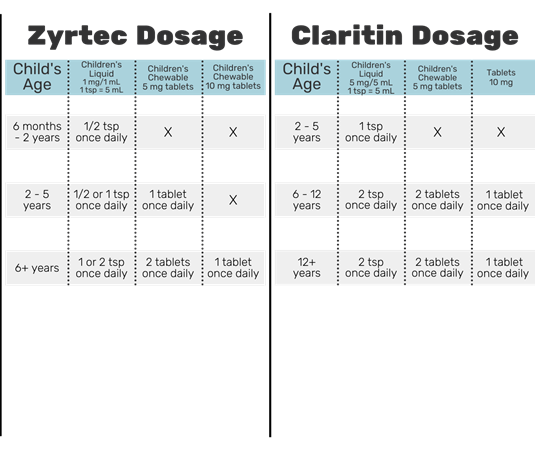
Antihistamine Dosage Guide